
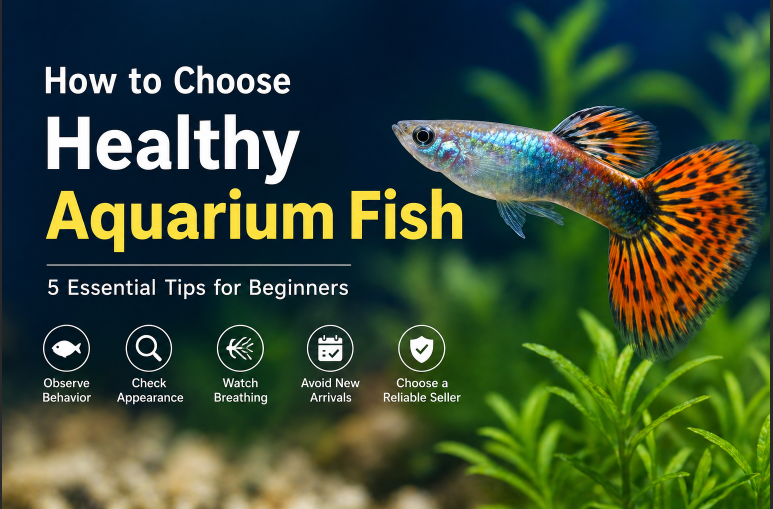
Choosing healthy aquarium fish is one of the most important steps for building a successful and long-lasting aquatic environment. Whether you're new to fishkeeping or buying fish online, knowing how to identify healthy fish can save you from common beginner mistakes.
In this complete guide, you’ll learn how to pick strong, disease-free aquarium fish, what signs to look for, and how to avoid costly errors.
Why Choosing Healthy Fish Matters
Many beginners underestimate how important fish selection is. Buying unhealthy fish can lead to:
- Frequent fish deaths
- Disease spreading in your tank
- Higher maintenance costs
- Stress and frustration
Healthy fish, on the other hand, are more resilient, adapt faster, and display brighter colors and natural behavior.
1. Observe Fish Swimming Behavior (Key Health Indicator)
One of the easiest ways to identify healthy aquarium fish is by watching how they swim.
What to look for:
- Smooth, balanced swimming
- Active movement around the tank
- Responsive to nearby motion
Warning signs:
- Floating sideways or upside down
- Staying at the bottom or hiding constantly
- Erratic or jerky movements
Fish behavior is often the first visible sign of stress or illness, so never skip this step.
2. Examine the Fish’s Body and Color
A healthy fish should look vibrant and physically intact.
Healthy appearance:
- Bright, natural coloration
- Clean and smooth scales
- Fully open fins
Signs of unhealthy fish:
- White spots (possible ich disease)
- Torn or clamped fins
- Red patches, wounds, or fungus
- Dull or faded colors
3. Check Breathing and Gill Movement
Breathing is a strong indicator of internal health.
Normal breathing:
- Slow, steady gill movement
- Calm posture
Abnormal breathing:
- Rapid gill movement
- Gasping at the surface
- Staying near filters or oxygen sources
These signs may indicate low oxygen levels, stress, or disease.
4. Avoid Buying Newly Imported or Stressed Fish
Newly arrived fish often experience transport stress.
Risks include:
- Weak immune systems
- Higher chance of disease
- Difficulty adapting to new environments
Pro tip:
Ask the seller:
“How long has this fish been in your shop?”
Choose fish that have been stable for at least a few days and are actively feeding.
5. Watch Feeding Behavior
Healthy fish are usually eager to eat.
Good signs:
- Fish swims toward food quickly
- Strong appetite
Bad signs:
- Ignoring food
- Slow or no response
Feeding response is one of the best real-time health checks.
6. Choose the Right Aquarium Fish Shop or Online Store
Where you buy your fish matters just as much as the fish itself.
A good aquarium store will:
- Keep tanks clean and well-maintained
- Separate sick fish from healthy ones
- Provide accurate information
- Offer guidance for beginners
If you run an aquarium shop, this is where you can stand out—trust is everything in this industry.

7. Avoid Overstocked or Dirty Tanks
The condition of the tank tells you a lot about fish quality.
Avoid tanks that:
- Look cloudy or dirty
- Have dead fish inside
- Are overcrowded
These environments increase the risk of disease and poor fish health.
8. Don’t Choose Fish Just Based on Price
Many beginners search for “cheap aquarium fish,” but price can be misleading.
Cheap fish may mean:
- Poor breeding conditions
- Weak or stressed fish
- Higher long-term cost due to losses
It’s better to invest in quality fish from a trusted seller.
Common Mistakes Beginners Should Avoid
- Buying too many fish at once
- Ignoring quarantine practices
- Mixing incompatible species
- Not researching fish requirements
Avoiding these mistakes will dramatically improve your success rate.
Final Thoughts
Learning how to choose healthy aquarium fish is a skill that every aquarist should master. By paying attention to behavior, appearance, and environment, you can confidently select fish that will thrive.
For aquarium business owners, educational content like this not only improves SEO rankings but also builds authority and customer trust—helping turn visitors into loyal buyers.