
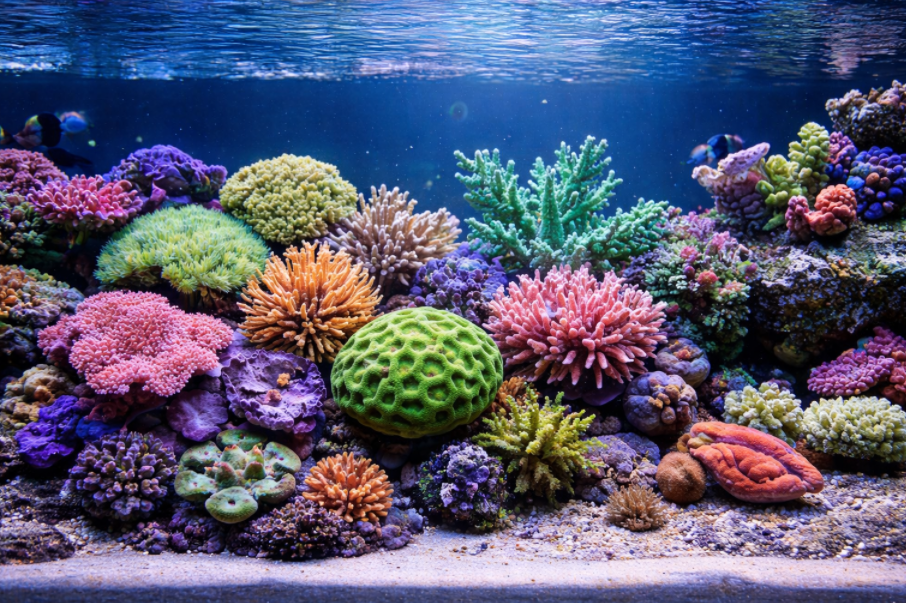
Keeping corals in a marine aquarium is one of the most rewarding aspects of reef keeping. Their vibrant colors, unique shapes, and natural movement can transform a simple aquarium into a living reef ecosystem. However, corals require stable water conditions, proper lighting, and the right equipment to thrive.
This guide will walk you through everything you need to know about coral care, including coral types, aquarium setup, water parameters, lighting, feeding, maintenance, and common problems.
1. Understanding Corals
Many beginners think corals are plants, but they are actually marine animals belonging to the phylum Cnidaria, the same group as jellyfish and sea anemones.
Corals are made up of thousands of tiny animals called polyps. These polyps build calcium carbonate skeletons, which over time form coral reefs.
How Corals Get Their Energy
Corals obtain energy in two main ways:
1. Photosynthesis
Most reef corals contain symbiotic algae called zooxanthellae living in their tissues.
These algae provide:
- Oxygen
- Sugars
- Energy through photosynthesis
Because of this relationship, corals require strong and stable lighting.
2. Capturing Food
Coral polyps also capture food using their tentacles.
They can feed on:
- Zooplankton
- Small crustaceans
- Organic particles
This is why occasional feeding can improve coral growth and coloration.
2. Types of Corals in Reef Aquariums
Corals are typically divided into three main categories.
Soft Corals
Soft corals do not have a rigid calcium skeleton. They are flexible and usually easier to keep, making them ideal for beginners.
Common soft corals include:
- Mushroom corals
- Leather corals
- Zoanthids
- Green star polyps
Characteristics:
- Hardy and adaptable
- Moderate lighting needs
- Fast growth
- Tolerant of small water fluctuations
Difficulty level:
⭐ Beginner-friendly
LPS Corals (Large Polyp Stony Corals)
LPS corals have large fleshy polyps and a hard calcium skeleton.
Popular examples include:
- Hammer coral
- Torch coral
- Frogspawn coral
- Brain coral
- Bubble coral
Characteristics:
- Large, flowing tentacles
- Moderate lighting requirements
- Moderate water flow
- Can benefit from feeding
Difficulty level:
⭐⭐ Intermediate
SPS Corals (Small Polyp Stony Corals)
SPS corals have small polyps and complex branching skeletons.
Common species include:
- Acropora
- Montipora
- Bird’s nest coral
Characteristics:
- Require strong lighting
- Require strong water flow
- Need extremely stable water parameters
- Sensitive to nutrient changes
Difficulty level:
⭐⭐⭐⭐ Advanced reef keepers

3. Essential Equipment for a Coral Aquarium
A stable reef aquarium requires the right equipment to maintain water quality and proper environmental conditions.
Aquarium Size
For beginners, a larger tank is usually easier to maintain.
Recommended size:
60–90 cm (24–36 inches) or larger
Benefits of larger tanks:
- More stable water parameters
- Less temperature fluctuation
- Easier to manage nutrient levels
Small tanks can change quickly and require more attention.
Protein Skimmer
A protein skimmer is one of the most important pieces of reef equipment.
Its main functions include:
- Removing dissolved organic waste
- Preventing ammonia buildup
- Improving water clarity
In simple terms, it removes waste before it breaks down in the water.
Water Flow Pumps (Wave Makers)
Water movement is critical for coral health.
Benefits of proper flow:
- Delivers oxygen and nutrients
- Removes waste from coral surfaces
- Prevents detritus buildup
Guidelines:
- Soft corals: low to moderate flow
- LPS corals: moderate flow
- SPS corals: strong turbulent flow
Adjustable wave pumps are highly recommended.
Coral Lighting
Lighting is one of the most critical components of a reef aquarium.
LED Reef Lights (Most Popular)
Advantages:
- Energy efficient
- Adjustable spectrum
- Lower heat output
- Long lifespan
T5 Fluorescent Lighting
Advantages:
- Even light distribution
- Excellent for SPS tanks
Disadvantages:
-
Bulbs require regular replacement
4. Ideal Water Parameters for Corals
Maintaining stable water chemistry is the key to long-term coral success.
| Parameter | Recommended Range |
|---|---|
| Temperature | 24–26°C (75–79°F) |
| Salinity | 1.023–1.026 |
| pH | 8.0–8.4 |
| Alkalinity (KH) | 7–10 dKH |
| Calcium | 400–450 ppm |
| Magnesium | 1250–1350 ppm |
| Nitrate (NO3) | 1–10 ppm |
| Phosphate (PO4) | 0.01–0.05 ppm |
Important tip:
Stability is more important than perfect numbers.
Rapid fluctuations often cause coral stress.
5. Coral Lighting Requirements
Different coral types require different light intensity.
| Coral Type | Lighting Level |
|---|---|
| Soft Corals | Low to moderate |
| LPS Corals | Moderate |
| SPS Corals | High |
Recommended photoperiod:
8–10 hours per day
Using a timer or smart lighting controller helps maintain a consistent light schedule.

6. Feeding Corals
While many corals rely heavily on photosynthesis, supplemental feeding can improve growth and coloration.
Common coral foods include:
- Reef roids
- Rotifers
- Phytoplankton
- Frozen brine shrimp
- Micro plankton
Feeding method:
- Turn off flow pumps temporarily
- Use a pipette or coral feeder
- Target feed the coral polyps
- Turn pumps back on after about 10 minutes
Feeding frequency:
Once or twice per week
Overfeeding can degrade water quality.
7. Coral Placement in the Aquarium
Placement depends on light and flow requirements.
Upper Tank Area
Best for:
- SPS corals
- High light species
Middle Area
Best for:
- Most LPS corals
- Moderate light species
Bottom Area
Best for:
- Mushroom corals
- Soft corals with lower light needs
Also note:
Some LPS corals extend sweeper tentacles that can sting nearby corals, so adequate spacing is necessary.
8. Regular Reef Tank Maintenance
Consistent maintenance keeps the reef environment stable.
Weekly Tasks
- Perform 10–15% water change
- Clean aquarium glass
- Inspect equipment
- Remove detritus if necessary
Monthly Tasks
- Test water parameters
- Adjust calcium, alkalinity, and magnesium levels
- Clean protein skimmer
- Inspect pumps and lighting
9. Common Coral Problems
Coral Not Opening
Possible causes:
- New environment stress
- Incorrect flow
- Sudden lighting changes
- Poor water quality
Many corals need several days to adjust to new tanks.
Coral Color Fading
Possible reasons:
- Insufficient lighting
- Nutrient imbalance
- Water instability
Maintaining proper nutrient levels and stable lighting can help restore coloration.
Algae Growth
Excess algae usually indicates high nutrient levels.
Solutions include:
- Reduce feeding
- Increase water changes
- Improve filtration
- Add clean-up crew
Examples of clean-up crew animals:
- Snails
- Hermit crabs
- Cleaner shrimp
10. Beginner-Friendly Corals
If you are new to reef keeping, start with hardy species such as:
- Mushroom corals
- Zoanthids
- Green star polyps
- Leather corals
These corals tolerate a wider range of conditions and grow relatively quickly.
Conclusion
Keeping corals can be challenging, but it is also incredibly rewarding. Watching a reef tank grow into a thriving miniature ecosystem filled with colorful corals and marine life is an experience that many aquarists find deeply satisfying.