
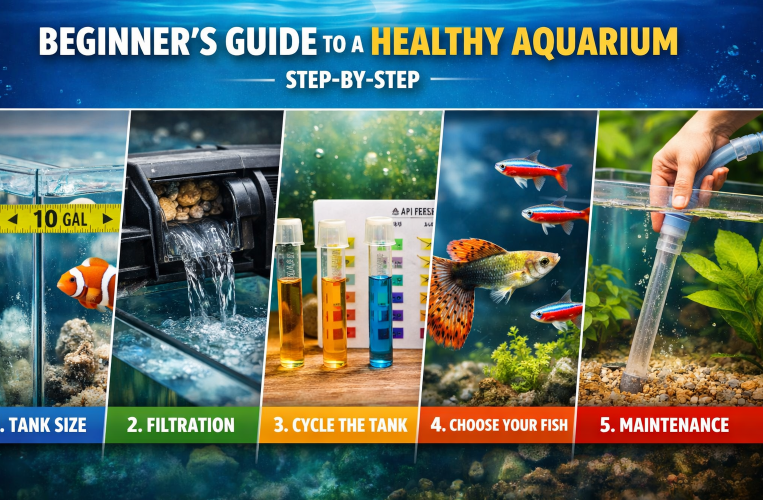
Starting your aquarium journey is exciting—but without the right knowledge, it can quickly become frustrating. Many beginners struggle with cloudy water, fish loss, or unstable conditions.
The good news? With the right setup and understanding, you can build a beautiful, low-maintenance, and thriving aquarium from day one.
In this complete guide, you’ll learn exactly how to set up a fish tank for beginners, avoid common mistakes, and choose the best equipment.
🌊 1. Choosing the Right Aquarium Size (Why Bigger Is Better)
When starting out, many people assume smaller tanks are easier—but in reality, the opposite is true.
👉 Why small tanks are harder:
- Water parameters fluctuate quickly
- Waste builds up faster
- Less room for fish to thrive
👉 Benefits of larger aquariums:
- More stable water chemistry
- Easier maintenance
- Greater flexibility in fish selection
Recommended tank sizes:
- Beginners: 40–80 liters (10–20 gallons)
- Intermediate: 80–150 liters
- Advanced setups: 150L+
💡 Pro Tip: A slightly larger tank can save you time, money, and stress in the long run.
🔍 SEO Keywords: best aquarium size for beginners, beginner fish tank setup
💧 2. Filtration System: The Heart of Your Aquarium
A proper filtration system is essential for maintaining clean and healthy water.
🔍 Types of Aquarium Filtration
1. Mechanical Filtration
- Removes visible debris and particles
2. Biological Filtration (MOST IMPORTANT)
- Supports beneficial bacteria
- Breaks down toxic ammonia and nitrites
3. Chemical Filtration
- Removes toxins, odors, and discoloration
🛠️ Popular Filter Options
- Hang-On-Back (HOB): Easy to use, great for beginners
- Canister Filters: Powerful, ideal for larger tanks
- Sponge Filters: Budget-friendly, perfect for breeding tanks
💡 Pro Tip: Never wash filter media with tap water—it kills beneficial bacteria.
🔍 SEO Keywords: aquarium filter types, best aquarium filter for beginners
🌱 3. The Nitrogen Cycle Explained (Step You MUST Not Skip)
The biggest mistake beginners make is adding fish too early.
Before fish can safely live in your tank, you need to establish the nitrogen cycle.
🔬 What Happens During Cycling?
- Fish waste produces ammonia (toxic)
- Beneficial bacteria convert ammonia → nitrite
- Another bacteria converts nitrite → nitrate (less harmful)
✅ How to Cycle Your Aquarium
- Set up your tank with filter and substrate
- Add water conditioner
- Introduce beneficial bacteria (optional but speeds up process)
- Let the system run for 1–2 weeks
- Test water before adding fish
💡 Pro Tip: A test kit is one of the best investments for beginners.
🔍 SEO Keywords: nitrogen cycle aquarium, how to cycle fish tank fast
🐟 4. Choosing the Right Fish (Compatibility Matters)
Not all fish get along—and choosing the wrong combination can lead to stress or aggression.
🐠 Best Beginner Fish Species
- Guppies – colorful, easy to breed
- Zebra Danios – hardy and active
- Neon Tetras – peaceful and visually stunning
- Platies – adaptable and beginner-friendly
⚠️ Fish Selection Tips
- Avoid aggressive fish (e.g., certain cichlids for beginners)
- Research compatibility before mixing species
- Add fish gradually (not all at once)
💡 Rule of Thumb: 1 cm of fish per liter (basic guideline, varies by species)
🔍 SEO Keywords: best beginner aquarium fish, community fish tank ideas
🌡️ 5. Water Quality & Maintenance (The Key to Long-Term Success)
A stable environment is more important than perfection.
🔁 Weekly Maintenance Routine
- Change 20–30% of water
- Clean glass and remove debris
- Check filter performance
🧪 Water Parameters to Monitor
- pH level
- Ammonia
- Nitrite
- Nitrate
🌡️ Temperature Guide
- Tropical fish: 24–28°C (75–82°F)
- Use a heater + thermometer for consistency
💡 Pro Tip: Sudden changes in temperature or water chemistry stress fish more than slightly imperfect conditions.
🔍 SEO Keywords: aquarium water parameters, fish tank maintenance tips
🌿 6. Aquascaping Basics (Optional but Highly Recommended)
Aquascaping turns your tank into a living piece of art.
🌱 Beginner-Friendly Elements
- Live plants (Anubias, Java Fern, Amazon Sword)
- Driftwood and rocks
- Natural substrate
Benefits of Live Plants
- Improve water quality
- Reduce algae growth
- Provide hiding spaces for fish
🔍 SEO Keywords: aquascaping for beginners, planted aquarium setup
🛒 Essential Aquarium Equipment Checklist
To make your setup smooth and successful, here’s what you’ll need:
✔ Aquarium tank
✔ Filter system
✔ Lighting
✔ Heater (for tropical fish)
✔ Water conditioner
✔ Substrate
✔ Fish food
✔ Water test kit
👉 At our aquarium store, we offer complete starter kits designed specifically for beginners—so you don’t have to guess what to buy.
🔍 SEO Keywords: aquarium starter kit, buy aquarium supplies online
❌ Common Beginner Mistakes to Avoid
Avoid these and you’ll save yourself a lot of trouble:
- Adding fish too early
- Overfeeding
- Overstocking the tank
- Skipping water changes
- Cleaning filter media incorrectly
🧡 Final Thoughts: Build a Thriving Aquarium with Confidence
Creating a successful aquarium isn’t about luck—it’s about understanding the fundamentals.
With the right setup, proper equipment, and consistent care, your aquarium can become:
- A relaxing centerpiece in your home
- A healthy environment for your fish
- A rewarding long-term hobby
🚀 Ready to Start Your Aquarium Journey?
Explore our online store for:
- Beginner-friendly aquarium kits
- High-performance filters
- Premium fish food and care products
👉 Start your aquarium the right way—your fish will thank you.